JKJAAC seeks urgent UN engagement as Kashmir march resumes after negotiations stall Organisers call for restraint, independent access and restoration of communications amid fears of renewed violence.
7/27/20263 min read
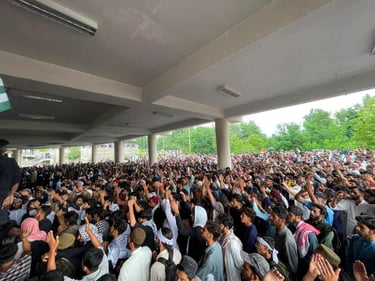
The Jammu Kashmir Joint Awami Action Committee (JKJAAC) has called for urgent United Nations engagement and international monitoring after protesters resumed a march from Rawalakot towards Muzaffarabad on Monday following the breakdown of negotiations with the authorities.
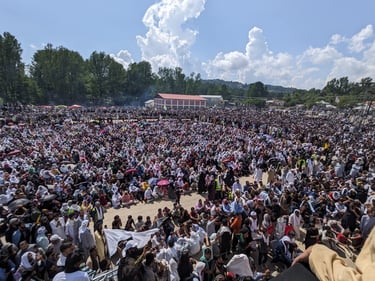
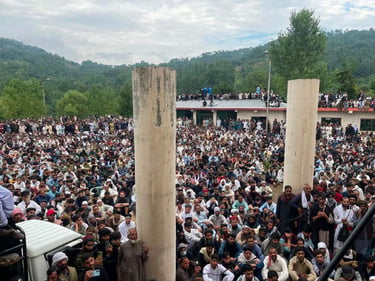
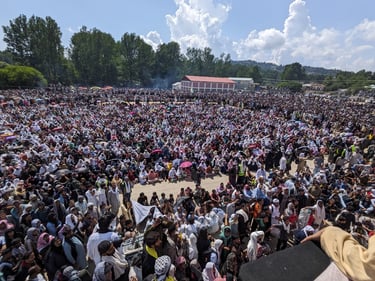
Al Jazeera reported that thousands had gathered in Rawalakot for the march, while other reporting said the demonstration resumed after talks failed to resolve demands concerning detainees, legal cases and political representation.
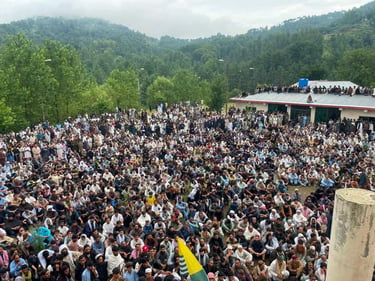
JKJAAC organisers say the march is peaceful and that more than 100,000 people may be participating, travelling towards the procession or gathering in support. That figure has not been independently verified because internet and telecommunications services remain severely restricted and journalists have limited access to affected areas.
The Advisory Council of JKJAAC said it was receiving reports of a possible security operation against march participants. It could not independently confirm reports of new casualties, injuries or arrests at the time of release.
“We appeal to all authorities and participants to prevent another loss of life. No live ammunition or excessive force should be used against peaceful civilians, and protesters must remain unarmed, disciplined and non-violent.”
March follows weeks of sit-in and failed talks
The protest march originally began on 9 June from Bhimber, Mirpur, Kotli and other districts before pausing on 10 June near Rawalakot. Protesters subsequently established a prolonged sit-in at Dharake Eidgah Ground while intermediaries attempted to negotiate an agreement between JKJAAC and the authorities.
The march resumed on 27 July after the talks failed to produce an agreed settlement. Reporting on Monday described the protest movement as entering its 52nd day, with demonstrators continuing to demand the release of detainees, withdrawal of cases and action on broader civil and political grievances.
The protests have focused on governance, economic conditions, electoral representation and the system of reserved seats in the regional Legislative Assembly. Authorities and protesters have offered competing accounts of the violence accompanying the unrest.
Jammu Kashmir Human Rights Observatory (JKHRO) and an independent human rights organisation reported 43 people had been killed and hundreds injured since the unrest began in June. Exact cumulative casualty figures remain disputed and should be independently verified.
Call for immediate restraint and access
The Advisory Council called upon the Government of Pakistan, the Government of Azad Jammu and Kashmir and all police and security authorities to:
· prohibit the use of live ammunition and excessive force against peaceful participants;
· avoid direct confrontation with unarmed civilians;
· open protected routes for ambulances, medical staff, food and essential supplies;
· restore internet, telephone and banking communications;
· permit access for Pakistani and international journalists, lawyers and human-rights monitors;
· disclose the identity, location and legal status of detained and missing persons;
· allow family, legal and medical access to people in custody;
· preserve police, hospital, CCTV, telecommunications and digital evidence; and
· return to negotiations through representatives with written authority to reach an agreement.
The Advisory Council also called on march participants to remain peaceful and unarmed, avoid approaching or pushing security lines, protect ambulance routes, refrain from damaging property and follow instructions only from identified organisers.
Request for United Nations engagement
The Advisory Council asked the UN High Commissioner for Human Rights, relevant UN Special Procedures and the UN Resident Coordinator in Pakistan to use available diplomatic, human-rights and humanitarian channels to help prevent further violence.
It requested that the United Nations:
· issue an immediate appeal for maximum restraint and civilian protection;
· seek assurances that lethal or excessive force will not be used against peaceful demonstrators;
· request access to Rawalakot for independent human-rights and humanitarian observers;
· support independent verification of reported deaths, injuries, detentions and disappearances;
· press for restoration of internet and telecommunications services;
· seek disclosure of detention locations and access for families and lawyers;
· request the return of any human remains still being withheld from families;
· seek protected humanitarian and medical access; and
· offer neutral facilitation for renewed, time-bound negotiations.
The UN Human Rights Chief, Volker Türk, had already appealed for calm, prompt and impartial investigations into all deaths, full internet access, due process for detained JKJAAC leaders and meaningful political dialogue. The UN also raised concerns about the criminalisation of a civil-society organisation and restrictions on freedom of expression, peaceful assembly and association.
“We are not asking for military intervention. We are asking for preventive diplomacy, independent monitoring, humanitarian access and neutral facilitation before more lives are lost.”
Appeal for independent reporting
The Advisory Council urged international and Pakistani news organisations to seek access to Rawalakot and the march route and to establish dedicated verification arrangements using hospital records, eyewitness testimony and geolocated material.
It asked editors to distinguish clearly between independently verified facts, attributed allegations and information still under review.
AFP has identified at least one AI-generated video falsely presented as footage of the unrest, reinforcing the need to authenticate all images and recordings before publication.
“Communications restrictions must not be allowed to turn Rawalakot into an information vacuum. Independent journalists and human-rights observers must be allowed access.”
Final appeal
The Advisory Council called for the immediate restoration of communications, full humanitarian and medical access, maximum restraint by all sides, disclosure of detainees and missing persons, independent investigation of reported deaths and an urgent return to negotiations.
“No more bloodshed. No information blackout. No disappearance without accountability. The international community should act before the present crisis results in further preventable loss of life.”
© 2025 Jammu Kashmir Joint Awami Action Committee. All rights reserved.
CONTACT US